Graduate School Essay & Personal Statement Editing Service
Stand out from the crowd of candidates by submitting a perfect graduate school admission essay.
Why Choose Us
Grad School Application
Professional help with graduate school essay may be essential, as you need to submit killer admission documents.
You may have a CV that’s overflowing with experiences to include in your graduate school application, but crafting a focused essay can be challenging. Graduate school admission essay editing by EssayEdge can help you tell your story. Our editors will make your writing clear and concise so that you can earn a coveted seat in the class.
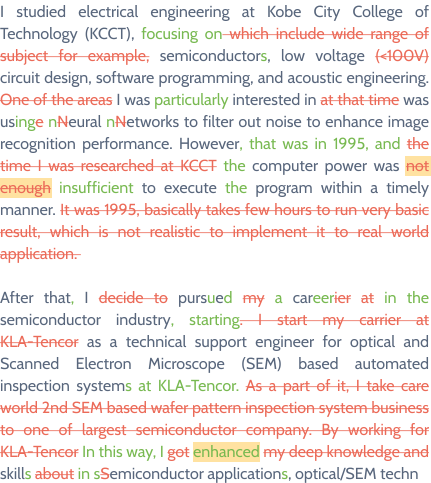
Some graduate schools ask for a resume. It shows who you are and what you’ve accomplished. Keep in mind that you shouldn’t transform a resume into your personal statement.
Every graduate school requests letters of recommendation. You can submit either professional or academic LOR. We can help you find out what letters will work best for you.
Always submit additional essays if you have a chance to do so, focusing on your personality or the diversity that you will bring to the school. A well-written admission essay is your chance to stand out.
This essay describes why you want to participate in a particular program or enter a specific school. Professional brainstorming with our experts may help you define your goals and write them down.
This is an essential part of your application package, so make sure to invest enough time in writing it. Our editors will ensure that your letter covers all the information related to the graduate school of your choice.
Write this essay to introduce yourself and show your potential contribution to the community. Graduate school personal statement brainstorming can help communicate your thoughts effectively.
Types of documents
In most graduate schools, applicants are required to submit a personal statement or statement of purpose, letters of recommendation, and some optional components.
Be sure to read your grad school instructions carefully and let our editors help you polish each document.
Our Team
Experienced Graduate School Essay Editors
Our editors have developed expertise in graduate school admission essay editing to help you write a flawless essay.
 Alex L.
"I am experienced in editing materials for undergraduate and graduate school admission, as well as academic papers and theses."
College; Graduate; Law; MBA; Medical School;
 Amy A.
"What started out as a part-time job to pay for my college tuition quickly grew into a passion for editing of entrance papers and counseling"
College; Graduate; Law; MBA; Medical School; Premier package;
 Anastasia M.
"My aim is to guarantee your unique skills, experience, and attributes are highlighted and shine through in your essays."
College; Cover Letter; Dental; Graduate; Law; MBA; Medical School; Premier package;
 Anna S.
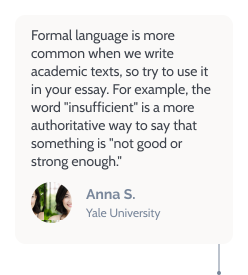
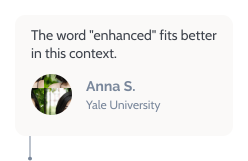
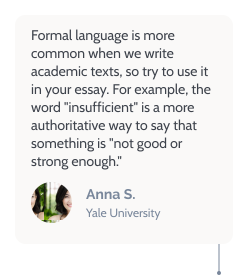
"I perfect a client's writing while also addressing critical areas that need improvement, all while maintaining the client's unique, memorable voice."
College; Graduate; Law; MBA; Medical School;
 Ashley R.
"I have a unique perspective on the college admissions process and on the job enrollment process."
College; Graduate; Law; MBA; Medical School;
 Brandon D.
"I am excited to help take your writing to the next level."
College; Education; Graduate; Law; MBA;
 Brian P.
"I improve an essay through specific and constructive feedback."
College; Graduate; Law; MBA; Medical School;
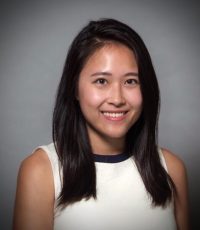 Cynthia C.
"I pride myself on my detail-oriented and conscientious editing skills that I am sure to tailor to the individual needs of each client."
College; Graduate; Law; MBA; Medical School;
 Helen M.
"I can handle most tasks, including resumes and work for college enrollment and graduate studies."
College; Graduate; Law; MBA; Medical School;
 James C.
"I like to work on essays for graduate programs (Master's and PhD) in any discipline."
College; Graduate; MBA;
 Julia Z.
I love supporting students with narrative stories, cover letters, academic essays, theses and dissertations.
College; Education; Graduate; Law; MBA; Premier package;
 Kai T.
"My approach focuses on clarity and conciseness."
College; Graduate; Law; MBA; Medical School;
 Kiran S.
"I am experienced editing admissions essays, recommendation letters, as well as academic papers and theses."
College; Cover Letter; Graduate; Law; Medical School;
 Linda R.
"I enjoy getting to know my customers and helping them reach their undergraduate and professional goals. It's always memorable to see them succeed."
College; Graduate; Law; MBA; Medical School;
 Lyra D.
"I have a deep love for the written word and have thoroughly enjoyed my time working with high schoolers to strengthen their writing skills."
College; Graduate; Law; MBA; Medical School;
 Mary F.
"I have a great deal of experience assisting those applying to law school and LL.M. programs."
Cover Letter; Graduate; Law; MBA; Medical School;
 Melissa S.
"I find great joy and satisfaction in crafting precise language, and in helping people tell their stories with honesty and style."
College; Graduate; Law; MBA; Medical School;
 Reid A.
"I am well versed in working with both undergraduate and graduate application essays."
College; Graduate; Law; MBA; Medical School;
 Scott J.
"My goal is to work with customers and help students present their ideas in their own words in a professional and grammatically sound manner."
College; Graduate; Law; MBA; Medical School;
 Shauna G.
"I love supporting students so they can achieve more in their academic writing, from theses to admissions materials like personal statements."
College; Graduate; Law; MBA; Medical School; Premier package;
 Susan L.
"I enjoy helping clients tell their particular stories: who they are at heart and how they got to where they are now in their lives."
College; Graduate; Law; MBA; Medical School; Premier package;
 Suset L.
"I am looking forward to helping countless new students achieve their academic aspirations."
College; Cover Letter; Graduate; Law; MBA; Medical School;
 Yasmine B.
"I’m a hands-on writing and editing coach. Let's work together to create an essay that stands out from the pack! "
College; Cover Letter; Graduate; Law; MBA; Medical School;
How it works
Getting Started Is Easy!
Place order
Provide the files you need help with and choose the type of service. Select your proofreader or let us recommend an expert.
Complete payment
Pay online using our secure payment methods, such as Visa, MasterCard, American Express, and Discover.
Track your order
Log in to your personal customer area and track the process of transformation of your essay.
Success
Download the final version, send it to an educational institution of your choice, and enjoy a new chapter in your life.
our offers
Choose the Offer That Works Best for You
Proofreading
from $69
You did a great job and almost finished your essay, but you still need a final check. Our specialist will refine your work for typos and grammatical errors, providing you with minor constructive suggestions.
See detailspricing
0 - 600 words $69
601 - 1,200 words $99
1,201 - 1,800 words $129
1.801 - 2,400 words $159
+2,400 words $12 per + 100 words
24-hour rush +$59
Standard
from $149
You have a half-finished essay, but you still need proofreading and critique to strengthen your writing. Our specialist will help improve your style and will provide a detailed review of structure, content, and tone.
See detailspricing
0 - 600 words $149
601 - 1,200 words $199
1,201 - 1,800 words $239
1,801 - 2,400 words $279
+2,400 words $12 per + 100 words
24-hour rush +$59
Second reading +50% of order price
All in one
from $229
You need a package of documents that are consistent in style and complement each other. Submit 3+ documents in one order, and we will assign one editor to work on them. The editor will polish all your docs and add suggestions on style and tone.
See detailspricing
1,800 - 2,400 words $229
2,401 - 3,000 words $289
3,001 - 3,600 words $399
3,601 - 4,200 words $459
4,201 - 4,800 words $519
72-hour rush $139
Brainstorming
from $120
30-45 min brainstorming session and outline after a call what needs to be in your application essay
See detailsPremier
from $379
You need comprehensive assistance to start writing your admission essay. Our proofreader will guide you through the process, from topic brainstorming to the finished piece. The second reading is included in this package.
See detailspricing
0 - 600 words $379
601 - 1,200 words $429
1,201 - 1,800 words $479
1,801 - 2,400 words $529
+2,400 words $12 per + 100 words
Universities
Top Universities That Admitted Clients After Using Our Graduate Essay Editing Service
- Harvard University
- Stanford University
- Massachusetts Institute of Technology (MIT)
- Yale University
- Princeton University
- University of California, Berkeley
- Columbia University
- University of Pennsylvania
- University of Chicago
- Duke University
Feedbacks
What Our Customers Say
Using such services as graduate school essay brainstorming, editing and proofreading, our customers have successfully submitted their applications.


Few Words About Graduate School Essay Editing
It’s important to understand the specificity of the graduate application essay, as your chances depend on this document. Our experts are true professionals in this field and know every nuance of grad school application essays. We know how it is significant for your future academic path and work to make your personal statement look polished, neat, and professional.
EssayEdge team of the best editors from the Ivy League has years of experience in academic editing. They are ready to share their expertise and will recommend how to highlight your unique personality in the grad school essay. We consider language aspects, structure, formatting, tone of voice, and specific instructions provided by the admission committee (depending on the chosen university and a major subject).
A wide range of legal services, a personalized approach, and highly experienced editors—we have all of these to assist you in crafting your admission masterpiece. EssayEdge experts are ready to be with you right from the moment you start writing the first draft until you finally submit your application. Choose the best fitting offer to make your grad school application essay correspond to all requirements and win the competition!
Graduate Personal Statement
A personal statement for graduate school shows your motivation and highlights the qualities making you the best-fitting candidate for a chosen program. With graduate personal statement editing, your statement will look completely perfect, free of any mistakes, and professional.
How Can Graduate Essay Editing Improve Your Application?
Sometimes, highly talented students have a lot of credentials and skills but do not know how to put them together in the graduate school application essay effectively. Still, it’s not a problem for our editors. EssayEdge service unites a team of the best experts who know how to reinforce your skills, experiences, and qualities. With their help, your essay will be free of mistakes and include a comprehensive overview of your educational background and academic experience.
We are working to provide expert help with grad school essays to make your application noticed by the committee. Our editors have years of experience working with graduate admission docs. So, they will detect all inconsistencies quickly and provide the most working ways to improve the quality of your text.
It’s necessary to mention that not only grammar matters to craft a good essay. Experts in graduate editing pay attention to various language nuances, including tone of voice, appropriate lexis usage, coherence, structure, and formatting. All these do matter and can influence the overall impression of your graduate school application essay. The more clear and concise your essay, the easier it will be perceived by the reader.
Our Expert Graduate Essay Editing and Proofreading Services Help Improve:
- Lexis. A graduate essay requires appropriate vocabulary. EssayEdge editors focus on word choice and eliminate any possible inconsistencies. You will get professional recommendations about the lexis to improve the quality of the essay without changing its initial context.
- The Tone of Voice. Some applicants forget about the importance of the style. In this case, colloquial words and expressions can be perceived as inappropriate, unprofessional, and even rude. Professional graduate school essay editing will help to make an impression of a respectful and admirable person.
- Coherence. It’s crucial to follow the content requirements and include all necessary points. Still, without the coherence between the sentences and paragraphs, reading the essay for graduate school and catching its main message will be hard. Our graduate essay editing gurus provide recommendations to make the text look neat, professional, and logically structured.
- Grammar Accuracy. Sentence structure affects the clarity of the text. Therefore, the applicant should ensure that his/her essay is error-free and reliable. After a thorough check, you will get the polished text without any grammar, spelling, or punctuation mistakes.
- Structure and Formatting. Of course, the content of the graduate essay matters. But it also should be well-structured and formatted according to all instructions. Apart from a standard check, you can get useful advice from our experts on structure and formatting issues.
- Engaging Narrative. Making your text interesting is one more significant aspect. Admission officers come across hundreds of essays for grad school admission, so your task is to make them engaged right from the first lines of your paper. In our editors’ feedback, you will find valuable tips on dealing with this issue effectively.
How Does a Graduate Essay Editing Service Help Correct Common Mistakes?
When writing a personal statement, it is important to avoid some common mistakes that can reduce your chances of success. Our grad school essay tutors often reviews common mistakes to be able to spot them in time and tell the applicant what the problem may be. Here’s how we do it:
- Lack of focus
Sometimes it is difficult to say something narrowly focused when there are many topics and aspects of your life. This makes your text vague, and less constructive.
How to avoid: Our graduate school essay help may advise you to determine the main topic, the message of your statement. It is also important to adhere to the topic throughout the text. It may be your academic development, professional experience, or a specific goal that you want to achieve with the help of the chosen program.
2. Listing facts without analysis
The personal statement should tell about you, but simply listing your experiences and achievements will not help you convince the admissions committee of your candidacy.
How to avoid: Our graduate essay help show you how to connect your accomplishments to specific developments, mentioning why this experience is important to you and your future. We help connect the dots and create a story that shows how your past experiences are preparing you for success in graduate school.
3.Negative comments
We understand that sometimes candidates want to talk about their experiences, and they use negative comments to do so. However, it may leave the admissions committee with a negative impression of you.
How to avoid: Our graduate school essays editing team helps you focus on the positive aspects of your experience. Even if there were challenges, it’s better to show how you overcame them and what you learned from them than to complain about the circumstances.
4. Lack of evidence
Statements like “I’m a good leader” or “I’m passionate about science” don’t carry weight without specific examples to back up those claims.
How to avoid: Our team of editors helps you provide specific examples for your experiences and statements. Instead of simply stating your qualities, demonstrate them with examples: talk about projects you have led or achievements that demonstrate your passion for science.
5. Spelling, grammar, and formatting errors.
Errors in the text can create the impression of carelessness and lack of attention to detail. However, the structure and format of the text can affect the readability of your text.
How to avoid: By proofreading your text, we help to find even the smallest errors. It helps to create a positive impression of you as a responsible and professional person.
Make Your Graduate School Essay Stand Out
Your graduate school essay is a tool to catch the admission committee’s attention. They are searching for the most talented students who fit their studying community perfectly. And unfortunately, even high GPAs and test scores are not enough to impress the officers. Applicants’ main goal is to demonstrate their unique personality apart from academic performance. Thus, you need to focus on the facts from your background that make you stand out from the crowd of competitors.
The grad school essay that works should promote your candidacy from the best side. With EssayEdge grad school essay help, you will know how to highlight your experience, skills, and qualities. Most of our editors are graduates from Ivy League schools, so they are aware of the best working tactics to win the competition for the dream place.
Also, applicants are very nervous and worried about their future. And it can result in missing some important details or, instead, putting a lot of unnecessary or irrelevant data. But professional proofreading helps to detect such issues and avoid any misunderstandings. If you are totally confused with the graduate school essay and have no idea what to write, mentoring and professional assistance from the draft to the final version of the doc will be really useful. With Premier Package, this service (together with a brainstorming session, email interaction, and phone conversation) will be available for you for 14 days.
What Are the Benefits of Using the Graduate School Essay Review Service?
Undoubtedly, a brilliant essay for grad school can boost your chances of getting into the chosen university. With the advice of our editing experts, your paper will perfectly reflect your personality and underline your strong points, making you the best choice for the admission committee.
It will be easier to achieve your goal with the grad school application essay help and professional support. We provide services for those who do not know how to start an essay and the applicants who need just a standard check to ensure that everything is OK. Everything depends on the situation. That’s why we take all your requirements seriously. Thanks to the personalized approach to every client, you will get the most fitting service.
Our graduate school essay editing service offers several pricing options that depend on the type of assistance and customer needs. In every case, our mission is to help you succeed in your application and make your admission dream come true.
Highlight Your Unique Personality to Impress the Admission Committee
A graduate application essay is a powerful tool for creating the best impression of yourself. This paper can make you stand out from the crowd of applicants or spoil everything right from the first lines. Thus, the applicant should take this opportunity seriously.
Apart from grad school essay help, EssayEdge editors from the Ivy League are ready to share their unique experiences. You will get useful recommendations on how to assure the committee that you are the best-fitting candidate. With our expert help, you will be confident that you did your best to impress the officers.
Our team of best professionals also prepared free guides, podcasts, sample graduate school admission essays, and blog articles, where you can find the best recommendations on crafting great documents.
Reasons Why We Are the Best Editing Service for Graduate School Essay
The New York Times calls EssayEdge the “world’s premier essay editing service”, and here are the main reasons why we are the best graduate school essay editing service:
- We unite the best team of professional editors with, on average, 12 years of editing and proofreading experience. Most of them are graduates or professors in Ivy League schools;
- Personalized approach to every client. We consider all the requirements and edit papers depending on the subject, chosen university, and specific instructions;
- EssayEdge is a legal service in the US and worldwide. We adhere to privacy and academic integrity policies;
- We provide essay help for grad school and other academic levels to increase your chances for success. The competition is becoming higher from year to year, and the importance of the personal statement is also increasing;
- Our task is to highlight your uniqueness. Every applicant’s story is sacred to us, and we provide editing and proofreading services without damaging your initial writing style.
FAQ
Frequently Asked Questions
Please check Frequently Asked Questions to learn more about our service and the ways we can help with your school application.
Check our FAQ for more detailed information
Do you have more questions? We are always here for you.