Medical School Essay & Personal Statement Editing Service
Become noticeable in the crowd of med school candidates by submitting a perfect application essay.
Why Choose Us
Med School Application
Application to medical school requires a huge investment and brainstorming, so your personal statement shouldn’t be taken lightly. If you need help, try our med school personal statement editing service.
EssayEdge medical school advisors have edited countless medical application essays, so they can help you craft an essay that goes beyond why you want to be a doctor, and gets at the heart of why you will be successful in the medical field.
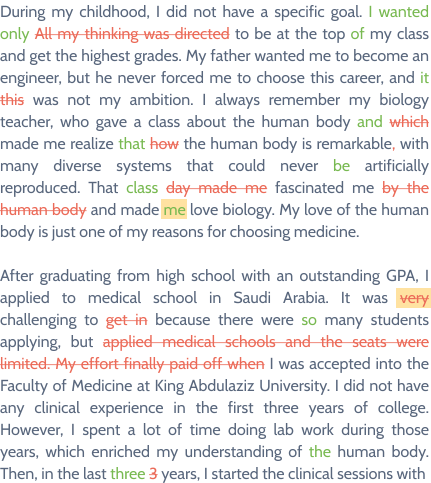
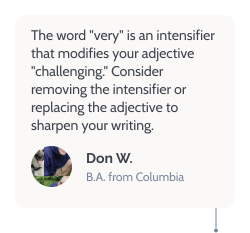
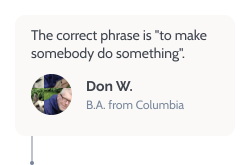
You write this essay to introduce yourself and show your potential contribution to the community. Personal statement brainstorming with our editors can help express your thoughts effectively.
This essay describes why you want to participate in a particular program or enter a specific school. Professional brainstorming with our experts may help you define your goals and write them down.
Always submit additional essays if you have a chance to do so, focusing on your personality or the diversity that you will bring to the school. A well-written admission essay is your chance to stand out.
Some medical schools ask for a resume. It shows who you are and what you’ve accomplished. Keep in mind that you shouldn’t transform a resume into your personal statement.
Every medical school requests letters of recommendation. You can submit either professional or academic LOR. We can help you find out what kind of letter will work best for you.
This is an essential part of your application package, so remember to invest enough time in writing it. Let’s ensure that your letter covers all the information related to the medical school of your choice.
Types of documents
Docs We Can Help With
The application process is a challenging stage to secure your spot at a medical school. You need to prepare several items to complete this stage, including your resume, letters of recommendation, essays, and transcripts.
The stronger each element of your application is the higher your chance of being admitted.
subjects
Programs We Can Help With
Our medical school advisors are experienced in working with various programs. They will help you polish each document.
Our Team
Experienced Medical School Essay Editors
Our editors have developed expertise in medical school personal statement editing to help you write a flawless essay.
 Alex L.
"I am experienced in editing materials for undergraduate and graduate school admission, as well as academic papers and theses."
College; Graduate; Law; MBA; Medical School;
 Amy A.
"What started out as a part-time job to pay for my college tuition quickly grew into a passion for editing of entrance papers and counseling"
College; Graduate; Law; MBA; Medical School; Premier package;
 Anastasia M.
"My aim is to guarantee your unique skills, experience, and attributes are highlighted and shine through in your essays."
College; Cover Letter; Dental; Graduate; Law; MBA; Medical School; Premier package;
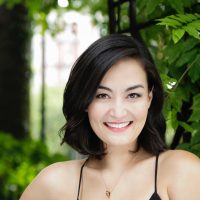 Anna S.
"I perfect a client's writing while also addressing critical areas that need improvement, all while maintaining the client's unique, memorable voice."
College; Graduate; Law; MBA; Medical School;
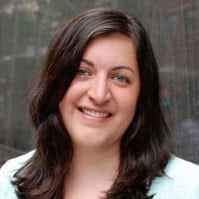 Ashley R.
"I have a unique perspective on the college admissions process and on the job enrollment process."
College; Graduate; Law; MBA; Medical School;
 Brian P.
"I improve an essay through specific and constructive feedback."
College; Graduate; Law; MBA; Medical School;
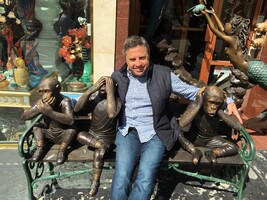 Carl P.
“I'm here to help you unleash the power of your writing through clarity, language. and structure.”
College; Law; MBA; Medical School;
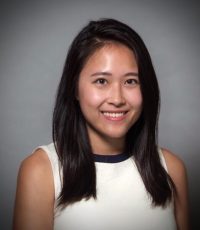 Cynthia C.
"I pride myself on my detail-oriented and conscientious editing skills that I am sure to tailor to the individual needs of each client."
College; Graduate; Law; MBA; Medical School;
 Helen M.
"I can handle most tasks, including resumes and work for college enrollment and graduate studies."
College; Graduate; Law; MBA; Medical School;
 John L.
"I like to put my language skills to good use on essays from all fields, but especially those in Medicine and Business."
Law; MBA; Medical School;
 Kai T.
"My approach focuses on clarity and conciseness."
College; Graduate; Law; MBA; Medical School;
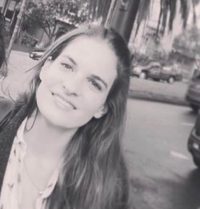 Kiran S.
"I am experienced editing admissions essays, recommendation letters, as well as academic papers and theses."
College; Cover Letter; Graduate; Law; Medical School;
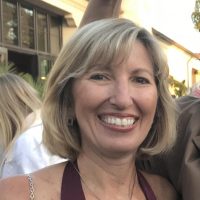 Linda R.
"I enjoy getting to know my customers and helping them reach their undergraduate and professional goals. It's always memorable to see them succeed."
College; Graduate; Law; MBA; Medical School;
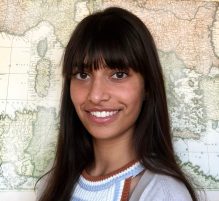 Lyra D.
"I have a deep love for the written word and have thoroughly enjoyed my time working with high schoolers to strengthen their writing skills."
College; Graduate; Law; MBA; Medical School;
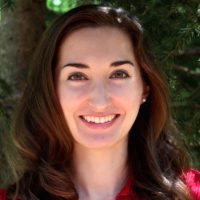 Mary F.
"I have a great deal of experience assisting those applying to law school and LL.M. programs."
Cover Letter; Graduate; Law; MBA; Medical School;
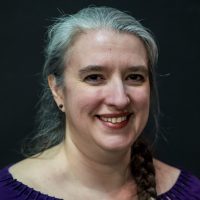 Melissa S.
"I find great joy and satisfaction in crafting precise language, and in helping people tell their stories with honesty and style."
College; Graduate; Law; MBA; Medical School;
 Reid A.
"I am well versed in working with both undergraduate and graduate application essays."
College; Graduate; Law; MBA; Medical School;
 Sam R.
"Send me your admissions essays, research proposals, academic papers, and theses. Let’s get to work!”
College; Education; Law; MBA; Medical School;
 Scott J.
"My goal is to work with customers and help students present their ideas in their own words in a professional and grammatically sound manner."
College; Graduate; Law; MBA; Medical School;
 Shauna G.
"I love supporting students so they can achieve more in their academic writing, from theses to admissions materials like personal statements."
College; Graduate; Law; MBA; Medical School; Premier package;
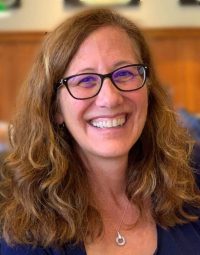 Susan L.
"I enjoy helping clients tell their particular stories: who they are at heart and how they got to where they are now in their lives."
College; Graduate; Law; MBA; Medical School; Premier package;
 Suset L.
"I am looking forward to helping countless new students achieve their academic aspirations."
College; Cover Letter; Graduate; Law; MBA; Medical School;
 Yasmine B.
"I’m a hands-on writing and editing coach. Let's work together to create an essay that stands out from the pack! "
College; Cover Letter; Graduate; Law; MBA; Medical School;
How it works
Getting Started Is Easy!
Place order
Provide the files you need help with and choose the type of service. Select your proofreader or let us recommend an expert.
Complete payment
Pay online using our secure payment methods, such as Visa, MasterCard, American Express, and Discover.
Track your order
Log in to your personal customer area and track the process of transformation of your essay.
Success
Download the final version, send it to an educational institution of your choice, and enjoy a new chapter in your life.
our offers
Choose the Offer That Works Best for You
Proofreading
from $69
You did a great job and almost finished your essay, but you still need a final check. Our specialist will refine your work for typos and grammatical errors, providing you with minor constructive suggestions.
See detailspricing
0 - 600 words $69
601 - 1,200 words $99
1,201 - 1,800 words $129
1.801 - 2,400 words $159
+2,400 words $12 per + 100 words
24-hour rush +$59
Standard
from $149
You have a half-finished essay, but you still need proofreading and critique to strengthen your writing. Our specialist will help improve your style and will provide a detailed review of structure, content, and tone.
See detailspricing
0 - 600 words $149
601 - 1,200 words $199
1,201 - 1,800 words $239
1,801 - 2,400 words $279
+2,400 words $12 per + 100 words
24-hour rush +$59
Second reading +50% of order price
All in one
from $229
You need a package of documents that are consistent in style and complement each other. Submit 3+ documents in one order, and we will assign one editor to work on them. The editor will polish all your docs and add suggestions on style and tone.
See detailspricing
1,800 - 2,400 words $229
2,401 - 3,000 words $289
3,001 - 3,600 words $399
3,601 - 4,200 words $459
4,201 - 4,800 words $519
72-hour rush $139
Brainstorming
from $120
30-45 min brainstorming session and outline after a call what needs to be in your application essay
See detailsPremier
from $379
You need comprehensive assistance to start writing your admission essay. Our proofreader will guide you through the process, from topic brainstorming to the finished piece. The second reading is included in this package.
See detailspricing
0 - 600 words $379
601 - 1,200 words $429
1,201 - 1,800 words $479
1,801 - 2,400 words $529
+2,400 words $12 per + 100 words
Universities
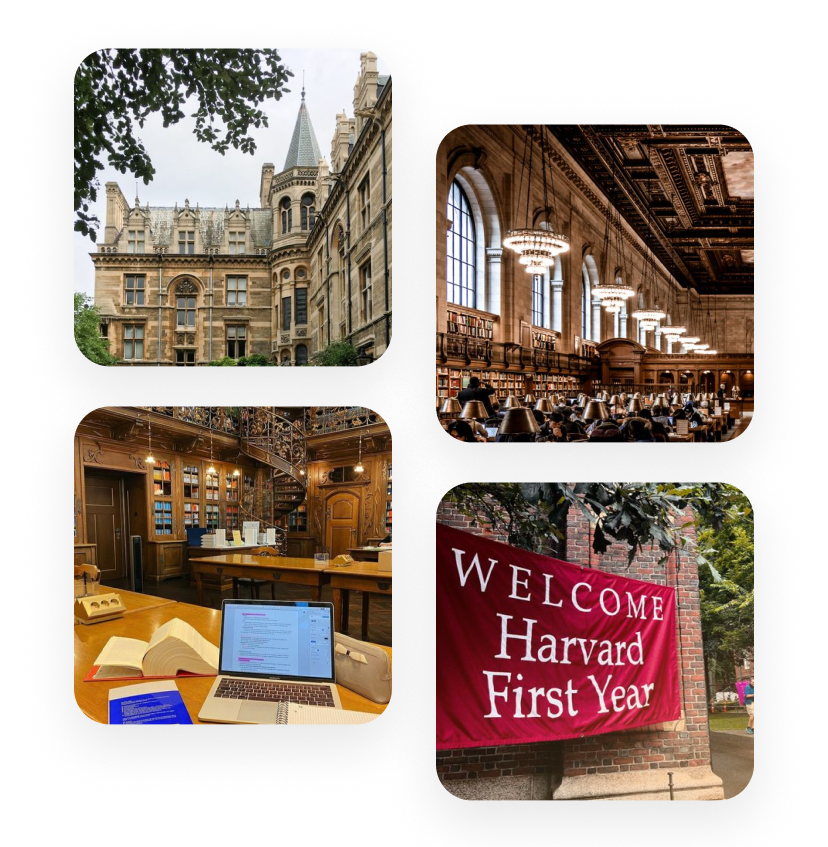
Top Universities That Admitted Clients After Using Our Medical Essay Editing Service
- Harvard Medical School
- Johns Hopkins University School of Medicine
- Stanford University School of Medicine
- University of California, San Francisco (UCSF) School of Medicine
- Mayo Clinic Alix School of Medicine
- Columbia University Vagelos College of Physicians and Surgeons
- University of Pennsylvania Perelman School of Medicine
- Washington University in St. Louis School of Medicine
- Yale School of Medicine
- Duke University School of Medicine
Feedbacks
What Our Customers Say
Using such services as law school personal statement brainstorming, editing, and proofreading, our customers have successfully submitted their applications.


Mistakes in Medical School Personal Statements
Personal statement is crucial for your medical school application, but there are common mistakes, which can negatively impact the overall impression of your essay. Our medical school application editing services team frequently identifies these pitfalls and helps applicants avoid them:
- Lack of Focus and Clarity: Many applicants write essays that lack a clear theme or focus. We may help create an effective personal statement that has a coherent narrative that ties together all parts of the essay.
- Generic Content: Using generic language and overused phrases, like “I want to help people” or “I have always dreamed of being a doctor,” can make your essay blend in with others. Our medical school personal statement editors help applicants focus on unique personal experiences and specific motivations that reflect their individuality and passion for medicine.
- Excessive Self-Promotion: It’s indeed important to highlight your achievements and strengths, but overly boastful language can turn off the reader.
- Lack of Personal Insight: Essays that fail to explain the “why” behind your desire to pursue a career in medicine often fall flat. Our editors encourage applicants to explore and articulate their journey and the experiences that shaped their decision to become a doctor.
- Overloading with Unnecessary Details: Including irrelevant details or excessive background information can make your essay feel cluttered and dilute the main message. Our medical school personal statement editing services team guide you in choosing the most impactful content and eliminating unnecessary information.
We Help to Make Your Essay for Medical School Stand Out
Med school admission essay is regarded as the most significant part of the admission process, and it’s no exaggeration. The medical personal statement is your opportunity to provide arguments and persuade the committee that your choice of the program is deliberate. What’s more, the application essay is a chance to show that you are a perfect candidate for entering a desired institution. So, everything should look perfect to increase your chances of success.
EssayEdge provides a variety of services. So, every client will find the most appropriate one, depending on the specific requirements. Whether you need expert proofreading or full assistance from brainstorming to the essay for medical school final submission, our editors are always ready to provide a helping hand.
Several pricing plans are available that enable the customers to select the best-fitting option depending on their needs. For instance, by choosing a Premier Package, you will get a brainstorming session, proofreading, e-mail interaction, and phone conversation with the chosen expert. Our medical editing service will also be useful even if you have perfect writing skills. It’s always a great idea to check whether your medical school admission essay is fully polished, isn’t it?
While working on your order, our specialists also consider the chosen university, program, and degree. Such a personalized approach helps to make your essays for medical school correspond to a particular university’s requirements. Additionally, most of our editors are former students of the Ivy League and other prestigious universities. So, they know for sure how it is to be in your shoes.
Our experts are aware of the specificity of the admission process, as application requirements and instructions can differ depending on the chosen educational institution. Thus, our professionals share info about entering different universities and share working tips to impress the admission committee and stand out from the rest of the applicants.
Expert Tips to Impress the Pickiest Committee
Together with medical school essay editing, our specialists provide expert recommendations and useful advice to improve your essay. Here are some tips from our editors to craft a successful med school application essay:
- Pay attention to the introduction and conclusion. An interesting hook at the beginning of the essay can help you attract the committee’s attention. Also, applicants often forget about the conclusion, which is the biggest mistake. A memorable concluding paragraph is one more opportunity to re-state why you are a perfect candidate and highlight your qualities and passion for applying for a medical school.
- Plan everything carefully. It is an effective strategy to craft the best essay for medical school admission. For instance, you can adhere to a step-by-step approach. Start with brainstorming and outline an essay. This way, it will be easier to ensure that you haven’t missed anything important.
- Highlight your best qualities. Emphasizing your unique personality is significant to stand out from the crowd. Moreover, it will show the committee that you know how to present yourself effectively. Remember that it’s not boasting of yourself. Instead, you provide necessary arguments supporting why you are a perfect candidate for the chosen program.
- Add details. Do not forget to mention real-life examples in your essay. For example, show how you demonstrated your qualities. Or you can tell the story describing the events that affected your personality development.
- Rely on your experience. Your skills, qualifications, academic background, and experiences are your main arguments. Of course, high grades and brilliant test scores are great. But the admission committee is searching for applicants who can implement their knowledge and qualities. Still, keep in mind that the mentioned experiences should be valuable and relevant.
Finally, do not forget to check everything before submitting because even a minor mistake can spoil the overall impression. With the professional medical personal statement help of our editors, you will be confident in the quality of your application essay for medical school.
Why Is Medical Editing Significant for Your Admission?
Professional medical school essay help is an excellent opportunity to make your paper the best version of itself. Our task is to help you highlight your personality and impress the committee. We work to help you get into the desired med school. Expert medical editing and proofreading service is not only about correcting mistakes. Here are the main benefits of using our service:
- Better grammar and punctuation;
- The improved tone of voice and word choice;
- Appropriate essay format and word count;
- Interesting and coherent narrative;
- Well-organized structure.
It’s important to mention that we do not produce any content related to the essay for medical school application. Our task is just to make the necessary improvements. The same refers to the content. Expert editing and proofreading do not harm your writing style. So, we will keep your unique voice and recommend ways to make it sound more professional.
Medical School Personal Statement Editing Service
The personal statement is the most important paper for your application to medical school. So, crafting a perfect essay is the key to entering the chosen institution. So, let’s make your personal statement brilliant together! Just place an order, and our editors will make your l admission paper neat, professional, and mistakes-free.
You can look through the med school admission essay samples to feel the difference and see how expert proofreading changes the way you perceive the essay for medical school. The same refers to the officers who will read your text—the better quality, the higher your chances of getting into the dream university.
Why We Are the Best Medical School Essay Editing Service
Legal Service
Using our editing and proofreading services is legal in the US and worldwide. You can be sure that there is no plagiarism or violation of admission rules or academic integrity principles. Our editors do not write any content. We provide expert recommendations to improve your med school admission essay or other docs.
Application Worldwide
Our specialists understand the specificity of the admission process in different educational establishments. We take into account the chosen degree, subject, program, and institution. EssayEdge experts are also ready to share the secrets of impressing the committee members of the most prestigious universities.
Experts From Ivy League
Our medical school essay editing service unites the best professionals with 12 years of average editing experience. All of them are native English speakers so you can be sure of the quality of their medical proofreading. Moreover, you’ll get an opportunity to cooperate with the graduates or current professors from Ivy League schools.
High Satisfaction Rate
Our satisfaction rate is 9.8 out of 10, and 98% of our customers recommend our services. Our clients claim that professional editing and proofreading significantly increase their chances of entering their dream universities. Read the success story of our dear client Chris who got into Columbia University.
Wide Range of Services
EssayEdge is not only about med school essay editing. Every client can find the most fitting service depending on his/her needs. You can just order editing to ensure everything is OK with the paper. Or if you are not sure about your writing skills, try our Premier Plan to get medical school personal statement help and complete guidance from brainstorming to the final draft.
Customized Approach
We adhere to a personalized approach to satisfy the needs of our customers. Our mission is to help you stand out from the rest of the applicants and impress the admission committee. So, the experts will consider every tiny detail to make your essay for medical school shine like a diamond.
24/7 Support With Quick Response
In case you need med school essay help or have questions related to medical editing services, our support team is available 24/7. We are always in touch to give you a helping hand and solve any issue.
Fast Turnaround
24 and 48 hours delivery is available for clients who need their med school personal statement as soon as possible. Still, do not worry that a fast turnaround will affect the quality of our services. Our specialists will provide services at the top level, even within a short deadline.
FAQ
Frequently Asked Questions
Please check Frequently Asked Questions to learn more about our service and the ways we can help with your school application.
Check our FAQ for more detailed information
Do you have more questions? We are always here for you.